Theory of Energy Entities

Stephen Cheng
Innovation Theorist

Abstract

It has been over one hundred years since Einstein introduced his Theory of Relativity. The theory states when an object increases in speed, its mass will also increase. This has been verified, but no answer has revealed the source from which the extra mass arises. We traditionally believe mass is located inside the matter that constitutes the object. Since kinetic energy consists of no solid matter, it would be illogical to assert that mass arises from nothing. If we say mass can attach to kinetic energy, then we need new physics laws to describe this. This paper is my attempt to solve this puzzle.

The answer should be based on physics, not on mathematics. For example, we have a mathematical equation in thermodynamics that PV=KT, where K is a constant, but to explain in physics why an increase in temperature results in an increase in pressure, we need to show that the air molecules become more energetic and bounce back from the wall with greater force. We have the equation E=mc², but it is a mathematic solution, not a physics solution. A few hundred years ago, people did not know that air consists of air molecules. Daniel Rutherford discovered that air consists of bouncing air molecules. I have attempted to do the same thing here.

1. Introduction

Scientific scholarship has demonstrated that many of our greatest inventors and innovators of the late 19th and early 20th centuries¾Thomas Edison, Alexander Graham Bell, the Wright brothers, Nikolaus Otto, and Chester Carlson¾were able, despite their lackluster academic performances, to produce revolutionary inventions. Given that they were frequently absent from school for long periods, either because of health or financial problems, one wonders how they were able to arrive at the kind of imaginative thinking that ultimately led to their original insights, inventions, and innovations. In attempting to answer this question, I shall argue that the particular methodology they shared in common¾logical analysis¾enabled them to overcome what otherwise would have been insurmountable handicaps. I shall also show that this same methodology may be applied to help solve an important contemporary problem, namely the problem presented by the accumulation of extra mass in an object moving at a high speed.

2. Two methodologies used for making innovations

Scientific discoveries include both inventions (the creation of new products or methods whose function is designed from the start) and innovations (the discovery of new abstract concepts).

There are two methodologies used in making inventions and innovations. The first methodology involves applying scientific knowledge. This methodology is usually used by scientists. For example, a scientist applies his or her knowledge of DNA, through trial and error, to find the gene that causes a certain disease. When applying scientific knowledge, one cannot assert anything that has not been proven to be true. Scientists using this method typically have large amounts of scientific knowledge in their fields, acquired mostly through academic study.

The second methodology useful in making inventions and innovations is logical analysis. This methodology can help one to come up with highly imaginative ideas. This methodology is usually used by innovators. An early example that involved logical analysis was an event which occurred over two thousand years ago in Greece. In 530 B.C., Pythagoras witnessed a lunar eclipse. On the basis of his observation, he conjectured that the dark portion of the eclipse was the shadow of the earth when lit by the sun. Noting that the shadow was round, he reasoned that the earth must also be a sphere. This innovation was made by logical thinking. Unfortunately, the technology available to Pythagoras at that time did not allow him to confirm his hypothesis. It was only in 1522, the year in which Magellan sailed around the world, that Pythagoras’ hypothesis was proven.

When using the logical analysis methodology, one must consider anything which has the slightest chance of being true. The innovator only requires the use of minimal, basic knowledge, but he or she must be highly skilled in the use of logical analysis and imagination. Many important inventions and innovations have resulted from the use of logical analysis.

The Wright brothers, two bicycle mechanics, made countless and detailed observations of the flight behavior of birds and noticed that whenever a bird soared in the wind with its wings fully outstretched and in a horizontal position, it gained altitude. On the basis of this phenomenon, they developed the hypothesis that a bird’s wings produced lift not only because they flap, but also because of their characteristic shape, i.e., arched on the upper surface and flat on the lower surface. This is logical thinking. The Wrights subsequently built a wind tunnel to test their hypothesis. When they saw it verified, they proceeded to design and construct the first airplane.

This is why inventors such as Thomas Edison, the Wright Brothers, and Alexander Graham Bell, who did not have academic degrees, were able to come up with revolutionary inventions.

Logical analysis skills are not often taught in school. One way to master logical analysis is to practice practical problem solving. I recall as a child attempting to solve the problem of how rainbows are formed, and it took me over a year to figure out. Many times I almost gave up, but I insisted that I could accomplish my goal and persisted until I found the answer.

3. Practical exercise: What causes ‘mass increase,’ and how can mass be transferred through material?

One of the problem-solving projects I worked on was to answer the question of where the extra mass comes from when an object is moving at a high speed. In Einstein’s Theory of Relativity, when an object is moving at a high speed, its mass will increase. This has been proven experimentally to be true. But where does this extra mass come from? We traditionally believe mass exists in solid form inside the matter which constitutes the object. If we say this extra mass is added to the existing mass inside the matter which constitutes the object, then we have created mass from nothing because kinetic energy has no solid form. This is illogical. If we say the extra mass is attached to the kinetic energy, then we must come up with a new physics law to describe this.

One other problem-solving project I worked on was to discover how mass is transferred through material. When hydrogen burns with oxygen to form water, photons (particles of light) are produced. Because a photon has weight (mass), the water formed will weigh less than the original hydrogen and oxygen, although the difference is very small. A hydrogen fuel cell is used to light a light bulb. The fuel cell also forms water from hydrogen and oxygen. The water, so formed, must also weigh less than the original hydrogen and oxygen. In this process photons are produced at the light bulb. Since mass and energy are inseparable, according to Einstein's equation E=mc², then by what means is mass transferred from the location of the fuel cell to the location of the light bulb? The solution we arrive at must explain how mass can be increased and how mass is transferred through material.

Our situation is similar to what Newton faced. Pythagoras hypothesized the existence of the solar system, but his hypothesis did not explain why the planets don’t just fly away. Newton explained this with his theory of gravity. Next, Einstein hypothesized ‘mass increase’ and it was verified as true. What causes mass to increase, and how can mass be transferred through material? We must come up with new physics laws to explain this. After we come up with a solution, we should also come up with an experiment that can verify our solution.

I hypothesize the existence of a new type of matter, which I call an energy entity. ‘Entity’ means something that exists but cannot be seen or felt. It does not have a solid body, but rather it takes the form of a body of a cloud. It attaches to matter and its shape follows the object to which it attaches. There are many kinds of energy entities, as many as the different kinds of energy we observe. For example, electric entity, magnetic entity, kinetic entity, mechanical entity, chemical entity, heat entity, etc., with the ‘entity mass’ component added to each. An object can have several different energy entities acting on it simultaneously. The kinetic entity urges the object to continue moving. The heat entity urges molecules to vibrate. I call this the Theory of Energy Entities.

Just because we cannot see or feel something does not necessarily mean that is does not exist. As long as an idea makes sense, we should try to verify it. It is not uncommon to have highly imaginary ideas; for example, scientists believe in the existence of graviton and try to test its existence. Einstein’s space-time curve concept is another imaginary idea that scientists have tried to verify with the Gravity Probe B satellite (as in last year’s news).

Now I will attempt to answer the question of how mass is transferred through material in an electric circuit. The electric entity consists of both mass and energy. We cannot see this electric entity, just like we cannot see the electric field. It exists along the electric circuit, just like the electric field does. The electric entity can urge the electric charges to move, just like the electric field exerts force on the electric charges to make them move. However, when charges need to overcome resistance, such as in the filament of a light bulb, the electric entity will provide both the energy and the mass. Therefore, when photons are produced in a light bulb connected to a fuel-cell power source, they have both energy and mass. On the other end, energy and mass are supplied to the electric entity by the chemical reaction of hydrogen and oxygen (chemical reactions are another type of entity called chemical entity). In this way, mass is transferred through the conductor in a fuel cell to the light bulb.

This transfer of mass through materials is also true with mechanical entity. Mechanical entity can transfer mass through a rope or rod during a mechanical action. Energy entities can transform from one to another. For example, potential entity can transform into kinetic entity and vice versa. The transformation is fast and smooth, but the mechanism by which it does so remains unknown. Some energy entities can penetrate free space. This is what we call a ‘field.’ The electric entity, magnetic entity, and gravity entity each have a corresponding field. The field strength obeys the Inverse-Square Law.

The above shows the characteristics of different energy entities, just like we have different air molecules such as nitrogen, oxygen, carbon dioxide, etc.

An object has two types of mass. One is creation mass, which is also called rest mass. The second type of mass is entity mass. It comes from the energy entities attached to the object. Entity mass can undergo a change during physical activity. It can be transferred to other objects or received from other objects. The ‘Mass Increase’ in Einstein’s theory comes from the kinetic energy entity’s mass.

I believe the creation mass is just the potential energy accumulated from the Big Bang at the time of creation. Before the Big Bang, the universe was a big black hole. Somehow, more and more energy was accumulated inside the black hole. Finally, it reached a point at which the gravitational force could not contain the energy force any longer. At that time, the Big Bang occurred. Heat energy was transformed into kinetic energy and potential energy. That is why the universe is scattering at a fast pace and all matter has a heavy mass. This is a logical explanation of the disappearance of the huge amount of energy required for an object to break away from a black hole. The original matter must have much less mass, but it could not have zero mass, otherwise gravity would not be able to pull it into a black hole. FIG. 1 shows the different types of mass attached to an object.

different types of mass attach on an object

I then tried to find a way to verify the existence of the energy entity. It was not easy, since we cannot see or feel the energy entity. This finally led me to follow an indirect path to verify the existence of the energy entity.

4. Existence of a biological energy entity can explain why twins are alike

Another problem-solving project I worked on was to investigate why twins are alike and the process by which an embryo becomes an adult. We know DNA has something to do with our physical and mental characteristics, but from a physics point of view, the DNA is not capable of explaining how life changes from an embryo into an adult. Nature will always use simple and straightforward methods to perform its task. Therefore, there should be a very simple and straightforward method which nature uses to enable an embryo to turn into an adult. All we need is to do is uncover it.

I pondered this question for many long hours. If all matter in nature has to have an energy entity attached to it, then it is very likely there may also be some special kind of energy entity attached to animals. This is logical deduction. Therefore, I propose the existence of a new material called a biological energy entity.

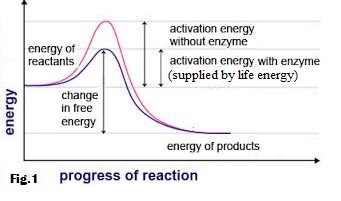
We cannot see or feel this biological energy entity, but it can feel us. This biological energy entity acts like some sort of a mold that guides biochemical reactions, as energy can catalyze biochemical reactions. Chemical bonds at body temperature are very stable. If there is some way to provide energy to the designated bonds to catalyze biochemical reactions, then this becomes a means to mold the biochemical reactions. Any slight deviation of the body shape from the mold will cause a biochemical reaction which results in a correction of the body shape. The reason twins are alike is because the biological energy entities of both twins, which mold the body shape, are the same.

The biological energy entity can also explain how life turns an embryo into an adult. In the beginning, the biological energy entity mold has the same shape as the embryo. As it absorbs energy, its mold changes shape. The embryo follows the shape of the mold. Thus, the body shape changes from an embryo to a newborn, then to a child, and finally to an adult. All chemical reactions are random. If we allow random chemical reactions, the embryo can never turn into an adult.

The biological energy entity is a collection of thousands and thousands of special energy entities from the genes. These entities work together to take care of the body, while each entity itself performs a special task. In a sense, it is similar to the whole population of a country that works together to care for and define the boundaries of the country.

The biological energy entity is a special case of an energy entity being applied to living organisms which developed through millions of years of adaptation in a suitable life-supporting environment. As described in Part 3, all objects also carry simple forms of naturally occurring energy entities. The reason we have not noticed their existence is because energy entities are invisible and cannot be felt.

After I came up with my highly imaginative idea, I tried to discover signs of the existence of a biological energy entity. As in any other energy form, energy can be stored or released. For example, we can lift a weight to increase its potential energy, and we can recover that energy when the weight is lowered. This is also likely true with a biological energy entity. The storage of energy must be achieved by the brain while we are sleeping. After sleeping, we feel refreshed, both physically and mentally, because we have recovered our biological energy. Animals are very vulnerable during sleep, thus there must be a good evolutionary reason for animals to sleep.

Therefore, in looking for signs of a biological energy entity, I investigated how the brain uses up its energy. The electrical activity in the brain consumes about 15 watts of energy. This is achieved by consuming 20% of the body’s oxygen uptake and glucose supply. Therefore, the brain temperature is typically higher than the core (artery) temperature by 0.3 degrees C (see appendix) because it draws blood from the artery. We can treat the body as a large tank that maintains a constant core temperature. The brain is akin to a small container that draws and circulates blood from the body. The brain is heavily insulated to prevent any heat loss [1]. A study with neurosurgical patients shows that the brain temperature fluctuates and sometimes is cooler than or the same temperature as the artery [2]. This lower brain temperature is also reported in other publications. The lower temperature of the brain is a sign that energy disappears in the brain, which helps support the argument that a biological energy entity really exists. The disappearance of energy is not explainable with our present physics laws, unless energy is not disappearing but is transferring to the biological energy entity.

It is particularly interesting that mass and energy can be transmitted from the brain to any part of the body. This is akin to the way a fuel cell transmits mass and energy anywhere within the electrical circuit.

5. The verification of the existence of a biological energy entity by experiment

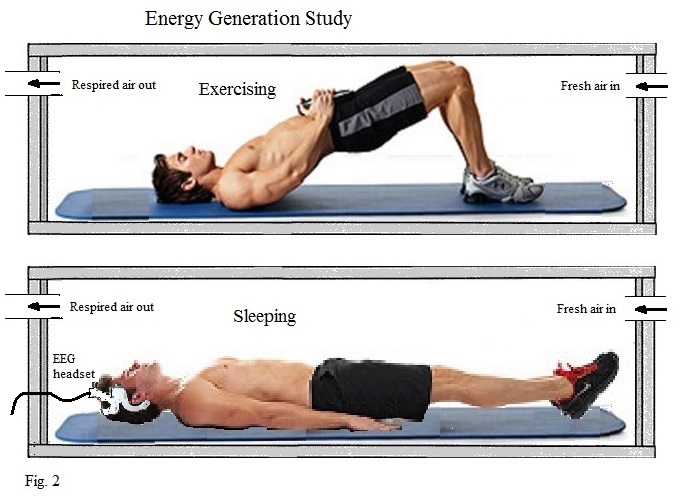
Finally, we can do an experiment to verify the existence of the biological energy entity. Inside a small, insulated chamber, there is a bed and an exercise machine. A volunteer participant for the experiment is placed inside the chamber. We measure the oxygen consumption and the amount of heat generated by the body of the participant while he or she sleeps. From the oxygen consumption, we can calculate the amount of energy consumed by the body and compare this with the amount of heat generated by the body. The difference represents the amount of energy stored up by the biological energy entity. Next, we measure the amount of oxygen consumption, heat generation, and work done by the body during physical exercise. From the oxygen consumption, we can calculate the amount of energy that the body consumes and compare this with the amount of energy the body expends (the heat generated by the body plus the work done by the body). The remainder is the amount of energy we have recovered from the biological energy entity.

Lastly, we measure oxygen consumption, heat generation, and work done by the body over a period of time while sleeping and while doing physical exercise. There should be no energy loss. This means the total biological energy we recover while sleeping equals the amount we expend in physical exercise. While energy disappears from the brain, there is no energy lost when we include the whole body in our observations. This means energy is transferred from the brain to another part of the body through the biological energy entity. This experiment will verify if the biological energy entity really exists.

6. Evaluate our logical analysis-type innovation

After we come up with a solution and the experiment to verify the solution, our next step is to evaluate whether it is worthwhile to spend the money to carry out the experiment, judging by the investment and the reward.

Evaluating a logical analysis-type invention/innovation is like going to a casino. Suppose there is $10,000 on the card table. You need a king in order to win. The chance of getting a king is 1 in 100. You need to bet $50 to get the extra card. Should you take the bet? Of course you should, because your investment would be $5,000 ($50x100), and your reward will be $10,000. When the reward is bigger then the investment, you should take the bet.

The evaluation exercise we are going to do is to evaluate whether we should carry out the experiment to verify the existence of the biological energy entity as described in Part 5. We must evaluate the chances that the experiment will come out to be true. The existence of this energy entity will provide us with explanations of 2 very important puzzles: 1) why twins are alike; and 2) how and why mass increases. This should not be just some simple coincidence that they are related. There must be a reason behind it. Therefore, the chance of it turning out to be true, I estimate, is 5 to 1. Then, we should consider our potential reward. By uncovering a new theory in both biology and physics, the reward is so great that I cannot put a dollar value less than one billion. The experiment, I estimate, will only cost about $200,000. From these figures, we would invest $1 million (5x200,000) for a $1 billion reward. Therefore, we should carry out the experiment.

7. Further development of this theory

At the present moment, the Theory of Energy Entities can only explain physically how a moving object increases in mass in Einstein’s Theory of Relativity. Other aspects of the Theory of Relativity such as Time Dilation, Length Contraction, and others are still under development and are still unable to be explained physically. I believe the cause of those aspects is that the property of matter is changed under the strong influence of the force of kinetic or gravity entity. I am still working on a solution. I hope other people also try to solve these puzzles and come up with solutions.

8. Conclusion

Logical analysis is a useful tool for making inventions and innovations. By using logical analysis, I was able to come up with the possible solution for why mass increases when an object is moving at a high speed and why twins are alike. Unfortunately, logical analysis has been sorely neglected, both in our educational system and by our research establishments. This situation has now reached critical proportions and can only be reversed by ensuring that students and researchers are given the opportunity, support, and time needed to carry out independent, creative, and curiosity-driven problem-solving.

Appendix

The calculation for the brain temperature is as follows: The volume of blood flow through the brain is 12.5 mL per second. The specific heat of blood is 3.8 J per gram per degree C. The energy consumption is 15 watts. Therefore, blood leaving the brain should be 15 watts/(3.8 J x 12.5 mL) =0.315 degrees C warmer.

References

1. D.A. Nelson and S.A. Nunneley. European Journal of Applied Physiology, 78: 353-359 (1998)

2. C. M. Crowde, R. Tempelhoff, M. A. Theard, M.A. CHENG, A. Todorow, R. G. Dacey. Journal of Neurosurgery, 85: 98 (1996)

If you have any question or comment, write to Stephen Cheng

[HOME]